Can ChatGPT Find Your Business? A Simple AI Visibility Check
Your customers are asking AI now
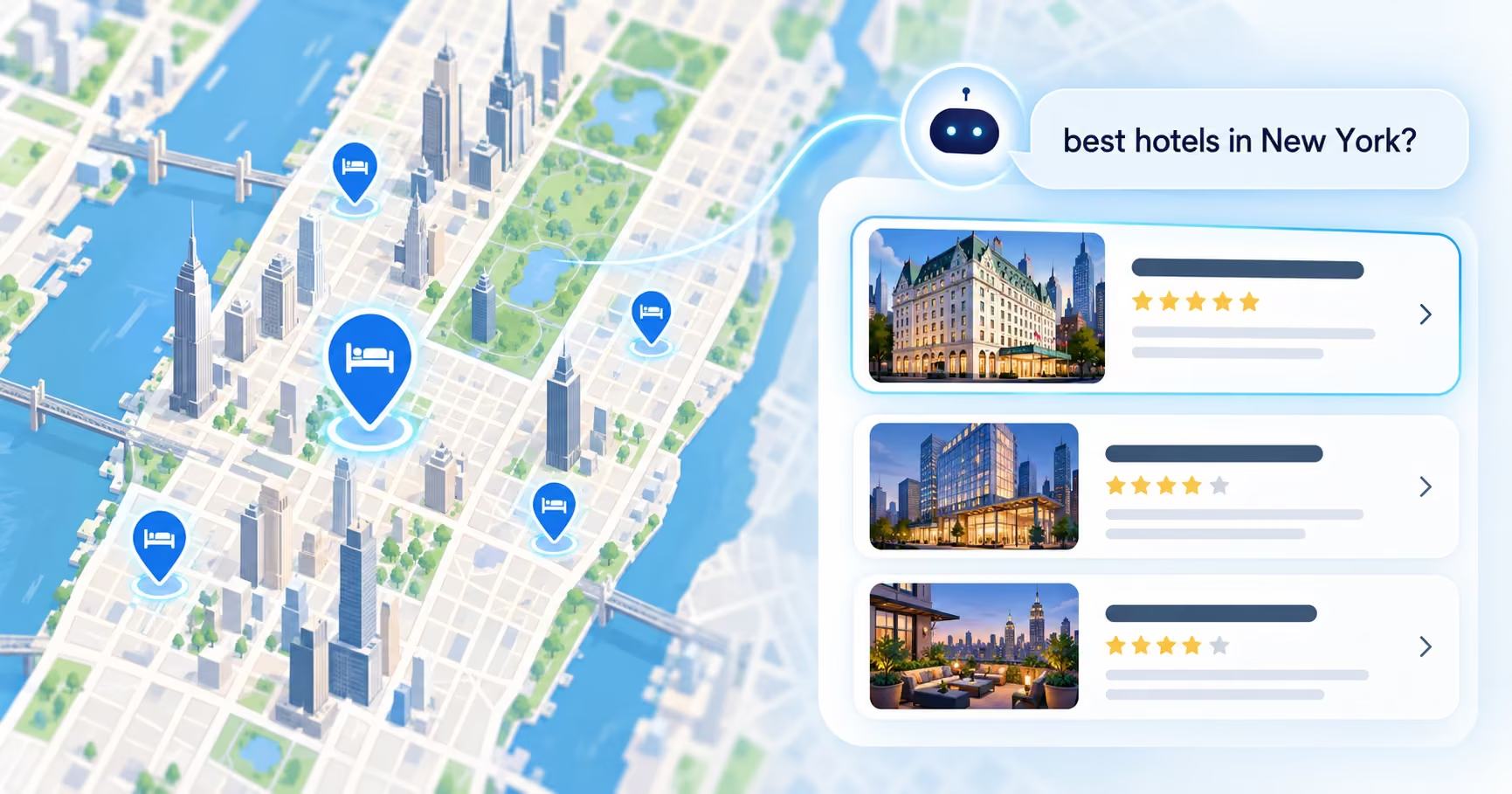
When people needed a dentist, a lawyer or a real estate agent, they used to type a few words into Google and scroll through links. More and more, they ask a question instead, like "Who's the best family dentist in Austin?", and read the answer an AI gives them. That answer may come from ChatGPT, from Gemini, or from the AI Overview now shown at the top of many Google results.
That raises a simple question for any business owner: when a potential customer asks AI about a business like yours, does yours come up?
You don't need special tools or technical knowledge to get a first answer. This article walks you through a simple check you can do yourself. It isn't a full audit, and it won't tell you how to fix anything. Its purpose is narrower: to show you whether there's a visibility problem worth looking into.
Being found isn't the same as being recommended
Before you start, it helps to know what you're looking for. An AI can do two different things with your business.
It can know about you. Ask ChatGPT, "What can you tell me about Smith Family Dental in Austin?" and it may describe the practice correctly. That's being found.
Or it can recommend you. Ask, "Who's the best family dentist in Austin?" and see whether your name appears at all. That's being recommended.
Many business owners only test the first and assume they're covered. But new customers rarely ask about you by name. If they knew your name, they'd just call. They ask the open question, and AI usually answers it by naming a handful of businesses and stopping there. If you're not on that short list, the customer may never learn you exist.
So this check focuses mainly on the open question: the one your future customers actually ask.
Before you start: pick the right questions
The check is only as good as the questions you ask. A few minutes of preparation makes the results far more useful.
1. Write down three to five questions a new customer would ask. Use their words, not yours. A patient doesn't search for "comprehensive restorative dentistry." They ask for "a dentist who can fix a broken tooth this week in Austin."
2. Mix broad and specific questions. For a dental practice, that might be "best family dentist in Austin," "affordable teeth whitening in South Austin" and "dentist in Austin for nervous patients." For a law firm: "employment lawyer in Denver" and "lawyer for wrongful termination in Denver."
3. Always include your city or area. Avoid "near me." AI chat tools often don't know where the person asking is located, so "near me" can return generic advice or businesses somewhere else. Use the city, neighborhood or region you actually serve.
4. Start with a clean slate. ChatGPT may remember your earlier conversations and tailor its answers to you. Use a Temporary Chat, or a private browser window without logging in. Better still, ask a friend to run the same questions on their device.
5. Keep a simple record. A spreadsheet or notebook is enough: the question, the tool, the date, whether you appeared, what was said about you, and which businesses were named.
Run the check: ChatGPT first, then Google and Gemini
Start with ChatGPT. Ask each question in a new chat and read the full answer, not just the first lines. Businesses mentioned near the end, or under "other options," still count.
Ask each question two or three different ways. AI answers aren't fixed. The same question can bring up different businesses with slightly different wording, or on a different day. For example:
• Who's the best family dentist in Austin? • Can you recommend a good family dentist in Austin? • I just moved to Austin and need a dentist for my kids. Who should I call?
If you appear in one version but not the others, that tells you something too: your presence is fragile.
Then repeat the same questions in Google.
Many will now show an AI Overview at the top of the results. Note whether you appear in the Overview and, separately, in the map results and regular listings below it. Plenty of your customers will never open ChatGPT. They see AI answers right inside Google.
Finally, try Gemini. If your customers are likely to use other assistants, such as Perplexity or Microsoft Copilot, add those too.
One more thing to note: when an answer shows its sources, write down which websites it cites. Directories, review sites and local news pages often shape what AI says about a whole category of business.
Three things to look at
1. Do you appear?
Count how many of your questions, across all tools and wordings, mentioned your business. Also note how you appeared. Being named first, with a reason, is very different from being fourth on a list or tucked under "you could also consider."
2. Is what it says about you accurate?
When you do appear, read the description closely. Check your services, location, hours, specialties and prices if mentioned, and how your reviews are described. Then ask about yourself directly by name: "What can you tell me about [your business] in [your city]?"
AI can confuse you with a business that has a similar name, list a service you stopped offering, or point people to an old address. A wrong description can hurt you as much as no mention at all, because the customer thinks they already know you, and moves on.
3. Who is recommended instead?
Write down every competitor named, and pay most attention to the ones that come up again and again. Then look at them with fresh eyes: visit their websites, read their reviews, and notice where else they're listed. You're not trying to copy them. You're trying to understand what AI sees in them that it isn't seeing in you.
Reading your results
One answer is a snapshot, not a verdict. Look for patterns across your questions and tools. Most results fall into one of these five outcomes:
You appear often, and the details are right
Your visibility is in reasonable shape for these questions. Recheck every few months, since AI answers change.
You appear, but the details are wrong or outdated
AI is relying on old or conflicting information about you somewhere online. This is worth investigating: wrong details can quietly steer customers away.
You appear only sometimes, depending on wording or tool
AI isn't confident about your business. This is worth investigating too. You're close, and small gaps may be tipping the balance.
Competitors appear, but you don't
AI doesn't know enough about you, or doesn't see you as a strong match for the question. This is the costliest outcome, and the clearest reason to look deeper.
No local businesses appear, only general advice
Your questions may be too vague, or AI has little information about your category. Try more specific questions. If the result holds, it's an opening for whoever gets there first.
If most of your results match any of the last four outcomes, that's your signal to look further.
What this check can't tell you
It's worth being clear about the limits of a do-it-yourself check.
• It can't tell you why. Seeing a competitor recommended doesn't explain what's causing it. The causes can sit on your website, in how your business is described across the web, in your reviews, or in technical details you can't see from a chat window.
• It's a small sample. A handful of questions on one day. Real customers ask in countless ways, and AI tools update constantly.
• It doesn't measure the cost. Knowing you're missing isn't the same as knowing how many inquiries that costs you.
• Your results may still be personalized. Even with a private window, location and device can shape what you see.
A proper AI visibility audit goes further. It tests a much wider set of questions systematically, across tools and over time. It traces where AI gets its information about you and your competitors. And it turns the findings into a prioritized list of what to fix first.
But you don't need an audit to take the first step. The check above is enough to tell you whether it's time to look deeper.
The takeaway
The way people choose businesses is changing faster than most websites are. Ranking well on Google still matters, but it's no longer the whole picture. More and more first impressions happen inside an AI answer, before anyone clicks anything.
The good news: finding out where you stand costs nothing but a little time. Pick your questions, ask them in ChatGPT, Google and Gemini, and look at three things. Are you there? Is it accurate? Who's there instead?
If the answers worry you, that's exactly what I do at AIO Presence. I run a complete AI visibility audit and show you what's holding your business back, and what to fix first. Request an evaluation.